Vet Tech Programs in North Carolina: Complete 2027 Guide to Becoming an RVT
Compare top vet tech programs in North Carolina by tuition, accreditation, admission requirements, and program length to find the right path to becoming an RVT.
Reviewed by: vettechprograms.org
Last updated: November 2026
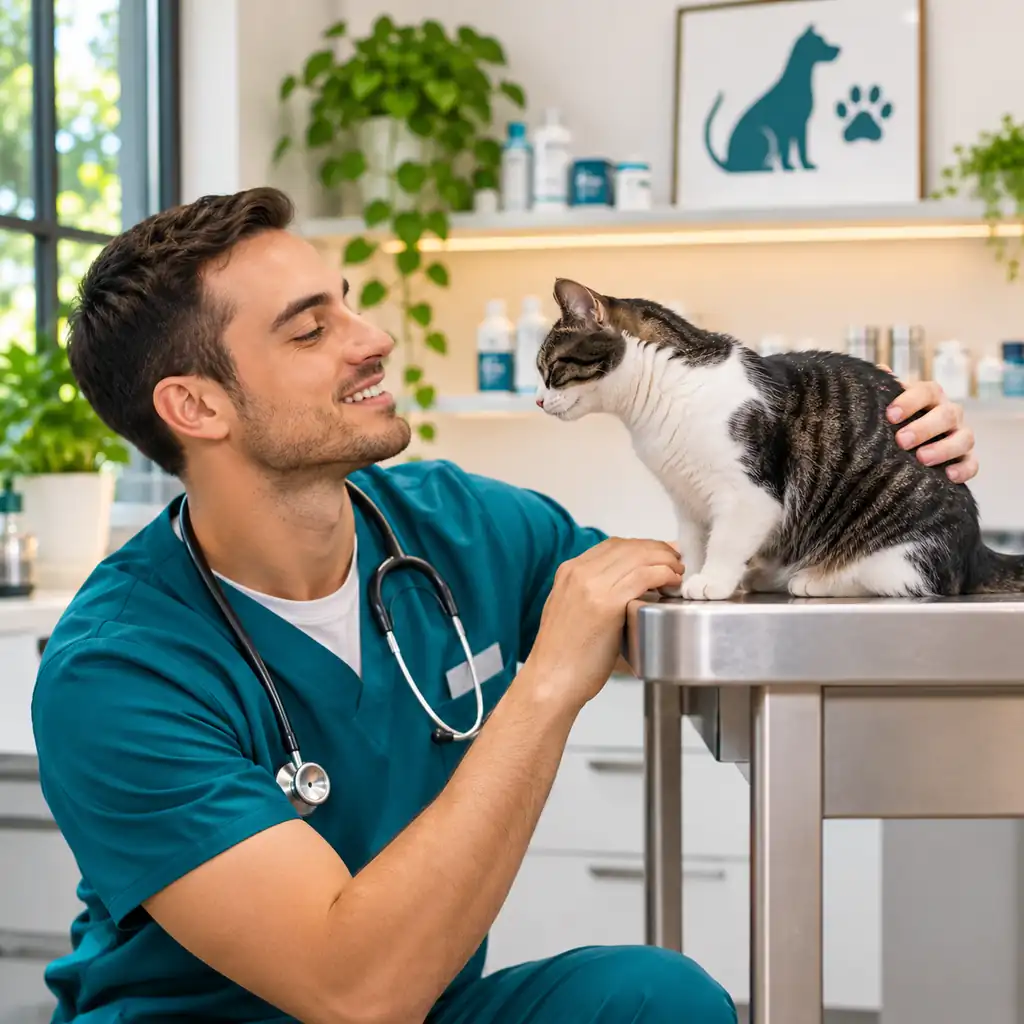
What You Need to Know First
North Carolina has six AVMA CVTEA-accredited veterinary technology programs: Asheville-Buncombe Technical Community College, Cape Fear Community College, Central Carolina Community College, Gaston College, Nash Community College, and Appalachian State University. The first five are community-college programs, while Appalachian State offers an accredited distance Bachelor of Science in Veterinary Technology.
To become a Registered Veterinary Technician (RVT) in North Carolina, you must graduate from an eligible AVMA-accredited veterinary technology program, pass the national Veterinary Technician National Examination (VTNE), and pass the separate North Carolina Veterinary Technician State Exam. North Carolina does not accept reciprocity, so applicants registered in another state must still pass the North Carolina State Exam.
Veterinary technician registration renews every two years for $50, and registered veterinary technicians must complete 12 hours of continuing education during each two-year renewal period.
North Carolina also legally protects the title “veterinary technician” and related titles. This matters for both students and veterinary practices that hire technicians. This guide covers accredited programs, licensing requirements, exams, renewal rules, salary data, and what to consider before enrolling.
North Carolina Vet Tech Career at a Glance
| Factor | Details |
|---|---|
| State Credential | Registered Veterinary Technician (RVT) |
| Licensing Board | North Carolina Veterinary Medical Board (NCVMB) |
| National Exam | VTNE ($375) |
| State Exam | NC Veterinary Technician State Exam: 50 questions, 75 passing score, 30 minutes |
| Reciprocity | None. Every applicant must take the NC State Exam |
| Registration Renewal | Every 2 years, $50 |
| CE Requirement | 12 hours per two-year period; maximum 6 hours from independent self-study, prerecorded webinars, audio conferences, or non-interactive online presentations |
| Accredited Programs | 6, including Appalachian State University’s accredited distance program |
| North Carolina Median Salary | $47,620 (BLS OEWS, May 2025) |
Sources: North Carolina Veterinary Medical Board, N.C. General Statutes, AVMA CVTEA, AAVSB, and Bureau of Labor Statistics.
Quick Decision Guide
| Your Situation | Best Path in North Carolina |
|---|---|
| Live in the Charlotte area | Gaston College (Dallas) |
| Live in western North Carolina | Asheville-Buncombe Technical Community College |
| Live in the Triangle or Sandhills | Central Carolina Community College (Sanford) |
| Live on the southeastern coast | Cape Fear Community College (Castle Hayne) |
| Live in eastern North Carolina | Nash Community College (Rocky Mount) |
| Want an online bachelor’s degree | Appalachian State University (Boone) |
| Already registered in another state | You still must take the NC State Exam because North Carolina does not accept reciprocity |
Do You Have to Be Registered to Work as a Vet Tech in North Carolina?
For the veterinary technician role, yes. North Carolina law requires a veterinary technician to be approved by and registered with the North Carolina Veterinary Medical Board before performing services that are otherwise prohibited to people who are not licensed or registered. State law also restricts the use of titles such as “registered veterinary technician,” “veterinary technician,” and “R.V.T.” to people authorized to use them.
For clinics and employers: North Carolina’s title-protection rules matter when hiring and identifying veterinary staff. Unregistered staff may work as veterinary assistants and perform duties permitted to them under North Carolina law, but they should not be represented as registered veterinary technicians.
What a technician may do: Under North Carolina law, veterinary technicians may assist veterinarians with activities such as diagnosis, laboratory analysis, anesthesia, and surgical procedures within the scope and supervision requirements established by law. Veterinary technicians may not independently perform acts that constitute the practice of veterinary medicine beyond the authority granted to them.
AVMA-Accredited Vet Tech Programs in North Carolina
North Carolina currently has six AVMA CVTEA-accredited veterinary technology programs. Five are community-college programs offering associate-level veterinary technology education, and Appalachian State University offers an accredited distance Bachelor of Science in Veterinary Technology.
Asheville-Buncombe Technical Community College
Location: Asheville
Degree: Associate of Applied Science
Accreditation: AVMA CVTEA accredited; first accredited in March 2006.
Cape Fear Community College
Location: Castle Hayne, near Wilmington
Degree: Associate degree in Veterinary Medical Technology
Accreditation: AVMA CVTEA accredited; first accredited in January 2019.
Cape Fear Community College reports 40 first-time VTNE candidates between January 2023 and December 2025, with a three-year first-time VTNE pass rate of 83.56%. Because this is a relatively small candidate group, compare outcomes with other schools using the same time period and methodology rather than relying on one percentage alone.
Central Carolina Community College
Location: Sanford
Degree: Associate of Applied Science, 75 credits
Format: Five semesters, with an extended option when work-based learning is scheduled differently.
Accreditation: AVMA CVTEA accredited; first accredited in 1974. The program has one of the longest accreditation histories among North Carolina’s veterinary technology programs.
Gaston College
Location: Dallas, Gaston County
Degree: Associate of Applied Science
Accreditation: AVMA CVTEA accredited; first accredited in November 1996.
Nash Community College
Location: Rocky Mount
Degree: Associate in Applied Science
Accreditation: AVMA CVTEA accredited; first accredited in January 2020.
Appalachian State University
Location: Boone
Degree: Bachelor of Science in Veterinary Technology
Format: Distance/online program with required hands-on clinical education
Accreditation: AVMA CVTEA initial accreditation effective September 19, 2024.
Appalachian State is an important option for students looking for a four-year veterinary technology degree with a distance-education format. Students should review the university’s current admission requirements, clinical requirements, and course-delivery format before enrolling.
Comparing North Carolina’s Six Accredited Programs
| Program | City | Degree | Format |
|---|---|---|---|
| Central Carolina Community College | Sanford | AAS | Campus-based |
| Gaston College | Dallas | AAS | Campus-based |
| Asheville-Buncombe Technical Community College | Asheville | AAS | Campus-based |
| Cape Fear Community College | Castle Hayne | Associate | Campus-based |
| Nash Community College | Rocky Mount | AAS | Campus-based |
| Appalachian State University | Boone | BS in Veterinary Technology | Distance/online with clinical training |
Alamance Community College Is Seeking Accreditation
Alamance Community College in Graham has started a veterinary medical technology program and has pursued AVMA CVTEA accreditation. It should not be counted among the six currently accredited North Carolina programs unless and until AVMA grants accreditation.
AVMA’s application process does not guarantee accreditation. If you are considering Alamance, ask the college about its current accreditation status, expected timeline, and how accreditation status could affect your eligibility for North Carolina veterinary technician registration when you graduate.
Some directories also list other veterinary technology programs, but students should verify accreditation directly through AVMA CVTEA before enrolling.
Online Options for North Carolina Students
Appalachian State University in Boone offers an online Bachelor of Science in Veterinary Technology and received AVMA CVTEA initial accreditation effective September 19, 2024.
The program is an important option for students who want a bachelor’s degree while completing much of their coursework through distance education. However, online does not mean entirely hands-off. Veterinary technology education requires supervised practical and clinical training.
Out-of-state online programs require additional research. Before enrolling, ask the school whether it can legally arrange required clinical, externship, or internship experiences in North Carolina and whether its AVMA accreditation is current.
See our online vet tech programs guide for more information about comparing distance veterinary technology programs.
How to Become an RVT in North Carolina: Step-by-Step Process
These steps are based on current information from the North Carolina Veterinary Medical Board and AAVSB. Requirements and fees can change, so confirm current details before submitting an application.
Step 1: Meet the Basic Requirements
The North Carolina Veterinary Medical Board requires applicants to graduate from an AVMA CVTEA-accredited veterinary technology program. Graduates of qualifying Canadian CVMA-accredited programs may also be eligible.
Applicants must also:
- Pass the VTNE
- Meet the Board’s citizenship or qualified-alien requirement
- Consent to a criminal history check
- Submit the required application documents
- Meet the Board’s other registration requirements
You do not have to be a North Carolina resident to apply for veterinary technician registration.
Step 2: Pass the VTNE
The Veterinary Technician National Examination (VTNE) is administered through the American Association of Veterinary State Boards (AAVSB).
The current VTNE consists of 170 multiple-choice questions: 150 scored operational questions and 20 unscored pilot questions. The exam is three hours long and is administered through PSI at testing centers or by live remote proctoring.
The VTNE fee is currently $375.
North Carolina recognizes the VTNE as part of the registration process.
New graduates: Since August 1, 2023, eligible veterinary technology students may take the VTNE up to six months before graduation if their school provides the required letter of academic standing. However, you cannot take the North Carolina State Exam until you have graduated and your degree has been conferred.
AAVSB currently allows a candidate to take the VTNE five times. Additional attempts require approval from the AAVSB Board of Directors.
Step 3: Apply and Take the NC State Exam
North Carolina requires all veterinary technicians seeking registration to pass the North Carolina Veterinary Technician State Exam. The state does not accept reciprocity, so this requirement also applies to applicants who are already registered in another state.
State exam details:
- 50 questions total
- 30 true/false questions
- 20 multiple-choice questions
- Passing score: 75
- 30-minute time limit
- No option to pause
- Taken online
- Open book
- Based on the North Carolina Veterinary Practice Act and related Board information
- NCVMB exam fee: $50
There is also a separate $50 AAVSB/CMS exam fee for the online state exam process.
Documents required may include:
- A transcript showing that your degree was conferred
- VTNE score information sent through AAVSB
- License verification from states where you previously held a veterinary technician credential
- A copy of your Social Security card
- Legal name-change documentation when applicable
Step 4: Pay the Fees
The main initial exam and registration costs are:
| Fee | Current Amount |
|---|---|
| VTNE | $375 |
| NCVMB State Exam application fee | $50 |
| AAVSB/CMS State Exam fee | $50 |
| Initial veterinary technician registration | $50 |
| Total | $525 |
So, based on the currently listed fees, plan for approximately $525 in initial VTNE, North Carolina state exam, and registration fees.
Other costs can apply depending on your circumstances, such as education, preparation materials, background-check-related costs, or documentation services.
Step 5: Receive Your Registration
After the Board receives and verifies your required education, exam results, documentation, and background-check information, it can complete your registration.
Once registered, you can use the credential and protected veterinary technician titles permitted under North Carolina law.
Step 6: Renew Every Two Years
North Carolina veterinary technician registrations renew biennially, meaning every two years. The renewal cycle is based on the year you were initially registered.
The NCVMB currently states that the renewal window opens October 1.
Renewal timeline:
- Registration remains active through December 31
- January 1–31: active/pending grace period
- February 1–end of February: active/late status and $50 late renewal fee
- March 1: registration is revoked if it was not renewed
Renewal requirements:
- $50 renewal fee
- 12 continuing education hours during the two-year renewal period
- No more than 6 hours may come from independent self-study, prerecorded webinars, audio conferences, or non-interactive online presentations
- The remaining CE must meet the Board’s requirements for interactive or in-person education
- The CE requirement includes 2 hours concerning abuse of controlled substances, which count toward the total 12 hours
- CE must be completed by the end of the applicable renewal period
- Keep CE documentation because the Board may conduct audits
If you graduate and become registered in North Carolina during the same year, you are exempt from the CE requirement for your first renewal cycle.
If your registration lapses, reinstatement can require additional fees, CE, documentation, and potentially examination depending on how long the registration has been revoked.
What Most North Carolina Guides Miss
There is no reciprocity. Even if you are already registered as a veterinary technician in another state, you must still take the North Carolina State Exam.
Titles are legally protected. North Carolina law restricts the use of “veterinary technician,” “registered veterinary technician,” and “R.V.T.” titles to people who meet the state’s requirements.
CE has real limits. North Carolina requires 12 CE hours during each two-year technician registration period, with a maximum of 6 hours from independent self-study, prerecorded webinars, audio conferences, or non-interactive online presentations.
January is a grace month, February costs more, and March can mean revocation. Missing the renewal deadline can create additional fees and reinstatement requirements.
You can take the VTNE before graduation. Eligible students may take the VTNE up to six months before graduation when the required academic-standing documentation is provided.
Appalachian State is now accredited. Its veterinary technology program received AVMA CVTEA initial accreditation effective September 19, 2024, so it should be included when counting North Carolina’s accredited programs.
Alamance is not yet part of the accredited count. It is an additional program pursuing accreditation, but students should verify its current status directly with AVMA before enrolling.
North Carolina Vet Tech Salary and Job Outlook
North Carolina veterinary technician pay is close to the national median.
What the Data Shows
| Measure | North Carolina | United States |
|---|---|---|
| Median annual wage | $47,620 | $47,380 |
| Employment | 2,580 | 129,140 |
North Carolina figures are based on BLS Occupational Employment and Wage Statistics data for May 2025. The national median is from the BLS.
North Carolina’s reported median wage is about $240 higher than the national median.
The BLS occupation includes veterinary technologists and technicians (SOC 29-2056), so state employment figures should not be interpreted as a count of only North Carolina RVTs.
North Carolina vs. Its Neighbors
| State | Median Technician Wage |
|---|---|
| Virginia | $52,090 |
| North Carolina | $47,620 |
| Georgia | $43,060 |
| Tennessee | $42,810 |
| South Carolina | $39,020 |
North Carolina’s median is higher than the reported medians for Georgia, Tennessee, and South Carolina, while Virginia’s is higher. Statewide medians do not guarantee what a new graduate will earn in a particular city or clinic.
How to Read This
- A median is not a starting wage. New graduates may earn less than the statewide median.
- Local pay varies. The Triangle, Charlotte area, mountains, and eastern North Carolina can have different wage levels.
- Experience matters. Specialized skills, emergency or specialty practice, management responsibilities, and additional credentials can affect compensation.
- Total compensation matters. Benefits, overtime, schedule, and employer-paid education can change the value of a job offer.
The BLS projects employment of veterinary technologists and technicians nationally to grow 9% from 2025 to 2035, which is faster than the average for all occupations. BLS also projects about 13,400 openings per year nationally over the decade.
Financial Aid for North Carolina Vet Tech Students
Contact each program’s financial aid office for current eligibility requirements, award amounts, and deadlines.
- FAFSA: Complete the Free Application for Federal Student Aid if you want to be considered for federal financial aid.
- College scholarships: Ask each school about institutional scholarships, grants, and other aid available to veterinary technology students.
- State and local aid: Eligibility varies by program, residency, income, and enrollment status.
- Employer assistance: If you already work in a veterinary practice, ask whether your employer offers tuition assistance or professional-development benefits.
- Professional scholarships: Veterinary organizations and foundations periodically offer scholarships for veterinary technology students.
Financial aid availability varies by school, so verify current opportunities directly with the program you plan to attend.
Why Accreditation Matters in North Carolina
Accreditation matters because the North Carolina Veterinary Medical Board requires applicants to graduate from an AVMA CVTEA-accredited program or meet the applicable recognition requirements for graduates of qualifying Canadian programs.
If a veterinary technology program is not accredited when you graduate, you may not meet North Carolina’s standard educational eligibility requirements for registration.
Before paying tuition, verify the program’s current AVMA CVTEA accreditation status directly with AVMA. Accreditation status can change, and a school that has applied for accreditation is not the same as a school that has already received accreditation.
Questions to Ask Yourself Before Enrolling in North Carolina
1. Which campus or program can you reach?
The five community-college programs are spread across different parts of North Carolina, while Appalachian State provides a distance bachelor’s option. Consider commuting, clinical requirements, transportation, and scheduling before enrolling.
2. Are you comfortable with two exams?
You will need to pass both the VTNE and the North Carolina State Exam. The state exam is based on North Carolina’s Veterinary Practice Act and Board information, so plan time to study the state’s rules.
3. Do you need online flexibility?
Appalachian State’s accredited veterinary technology bachelor’s program uses a distance-education format, but veterinary technology still requires hands-on clinical education. For other online programs, verify that required clinical experiences can be completed legally and practically in North Carolina.
4. Are you considering Alamance?
Ask about its current AVMA accreditation status, expected accreditation timeline, and what its status means for your eligibility if you graduate before accreditation is granted.
Is a Vet Tech Career Right for You in North Carolina?
Vet tech work can be rewarding, but it is also physically and emotionally demanding. Before enrolling, consider whether the day-to-day responsibilities fit your interests, abilities, and career goals.
Strong fit if you:
- Stay calm during animal emergencies and stressful situations
- Can handle medical procedures, blood, and injured animals
- Communicate well with worried pet owners
- Have the stamina for long shifts on your feet
- Are comfortable safely restraining and handling animals
- Can handle euthanasia and difficult cases
- Enjoy science, animal health, and hands-on medical work
Worth reconsidering if you:
- Cannot tolerate blood, medical procedures, or animal distress
- Prefer administrative or office-only work
- Do not want a physically active job
- Are uncomfortable handling or restraining animals
- Need a high starting salary immediately
Consider volunteering, shadowing, or speaking with veterinary professionals before committing to a program. Real-world exposure can help you understand the work before investing in tuition and training.
If you are not ready for a veterinary technology degree, working as a veterinary assistant can be another way to gain experience in a veterinary setting. See our vet assistant programs guide.
Frequently Asked Questions About North Carolina Vet Tech Programs
Do I have to be registered to work as a vet tech in North Carolina?
For the veterinary technician role, yes. North Carolina law requires veterinary technicians to be approved and registered with the Board before performing services that require technician authorization, and state law protects veterinary technician titles. Unregistered staff may work as veterinary assistants within the duties permitted to them.
How many accredited vet tech programs does North Carolina have?
North Carolina currently has six AVMA CVTEA-accredited veterinary technology programs: Asheville-Buncombe Technical Community College, Cape Fear Community College, Central Carolina Community College, Gaston College, Nash Community College, and Appalachian State University.
Alamance Community College is an additional program pursuing accreditation but should not be included in the accredited count until AVMA grants accreditation.
Does North Carolina require a state exam?
Yes. Every applicant seeking North Carolina veterinary technician registration must pass the North Carolina Veterinary Technician State Exam. The exam has 50 questions, a 75 passing score, and a 30-minute time limit. North Carolina does not accept reciprocity, so applicants registered in another state must also take the NC State Exam.
How much does it cost to become an RVT in North Carolina?
The current listed fees are $375 for the VTNE, $50 for the NCVMB state exam application, $50 for the AAVSB/CMS state exam, and $50 for initial veterinary technician registration.
That makes the current total $525 for the main exam and initial registration fees. Education and other personal/documentation costs are separate.
How often does an NC registration renew, and how much CE is required?
Veterinary technician registration renews every two years for a $50 fee. Registered veterinary technicians must complete 12 hours of continuing education during the two-year period, with no more than 6 hours from qualifying self-study, prerecorded, audio, or non-interactive online education.
How much do vet techs make in North Carolina?
BLS May 2025 data shows a North Carolina median annual wage of approximately $47,620 for veterinary technologists and technicians. The national median was $47,380.
Actual pay varies by experience, employer, specialty, location, schedule, and benefits.
Can I take the VTNE before I graduate?
Yes. Since August 2023, eligible North Carolina veterinary technology students may take the VTNE up to six months before graduation if their school provides the required letter of academic standing. You cannot take the North Carolina State Exam until your degree has been conferred and the required documents have been submitted.
Can I study vet tech online and work in North Carolina?
Yes. Appalachian State University offers an AVMA-accredited online/distance Bachelor of Science in Veterinary Technology. Other online programs may also be available, but students should verify current AVMA accreditation and confirm that required clinical training can be completed in North Carolina.
Vet Tech Programs in Neighboring States
- Virginia Vet Tech Programs
- South Carolina Vet Tech Programs
- Georgia Vet Tech Programs
- Tennessee Vet Tech Programs
Related Vet Tech Resources
- Complete Vet Tech Programs Guide
- Online Vet Tech Programs
- Vet Tech Salary by State
- VTNE Exam Guide
- Vet Assistant Programs
- How to Become a Vet Tech
- VTS Specialty Certifications
Sources
Licensing requirements, accreditation status, examination procedures, fees, and salary data can change. Verify current details with the North Carolina Veterinary Medical Board, AVMA CVTEA, and AAVSB before applying or enrolling. This content is educational and is not legal, licensing, or career advice.